Origins: The Three Holy Grails
Sapphire is corundum — aluminium oxide — coloured blue by trace amounts of iron and titanium. But not all sapphires are created equal, and where a stone comes from can matter as much as how it looks.
Kashmir sapphires, mined from the Paddar district of the Himalayas in the late 19th century, represent the pinnacle. The deposit was largely exhausted by the 1930s, meaning supply is essentially fixed. Kashmir stones exhibit a characteristic "velvety" blue caused by microscopic silk inclusions that scatter light, creating a soft, luminous quality that no other origin reliably replicates. Fine Kashmir sapphires now sell for $50,000 to $200,000+ per carat at auction.
Ceylon (Sri Lanka) is the world's most consistent producer of fine sapphires. Ceylon stones range from pale cornflower blue to vivid royal blue, with a clarity and brilliance that makes them perennial favourites. The island has produced sapphires for over 2,000 years and continues to do so. Ceylon origin commands a meaningful premium over stones from other commercial sources, typically 20–50% for equivalent quality.
Burma (Myanmar), specifically the Mogok Valley, is the third of the classic origins. Mogok sapphires tend toward a rich, saturated "royal blue" with strong fluorescence. Like Kashmir, Mogok production has declined significantly, making certified Burmese sapphires increasingly rare.
Colour Grading: From Cornflower to Royal Blue
Colour is evaluated across three axes: hue, tone, and saturation. For blue sapphires, the ideal hue is pure blue with at most a slight violet modifier. Tone describes lightness to darkness on a scale of 0–100, with the commercial sweet spot between 75 and 85. Saturation is where sapphires really differentiate themselves — "vivid" saturation commands the highest premiums.
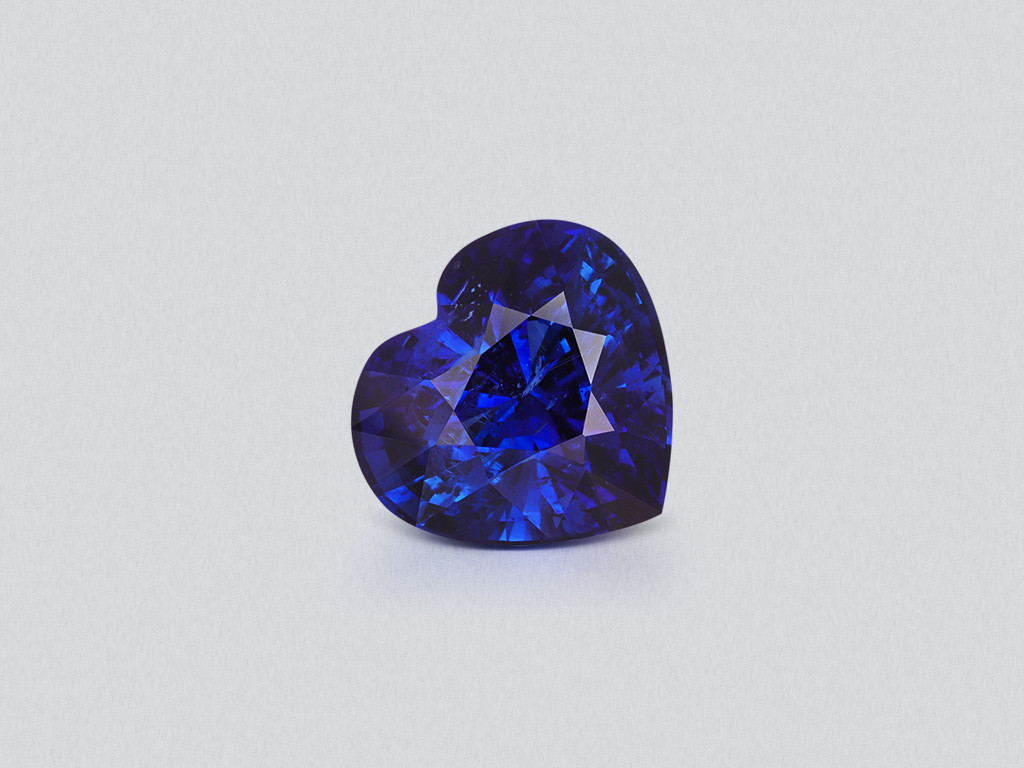
The terms "cornflower blue" and "royal blue" are trade descriptors rather than technical grades. Cornflower blue describes a medium-toned, highly saturated blue often associated with fine Ceylon stones. Royal blue is darker and more intensely saturated, typically associated with Burma and some Ceylon material.
Heat Treatment: The 97% Reality
Approximately 97% of sapphires on the market have been heat-treated. Heating stones to temperatures between 1,200°C and 1,800°C dissolves rutile silk inclusions, improves colour, and can heal fractures. The result is a more transparent, more intensely coloured stone. Heat treatment is permanent, stable, and fully accepted by the trade.
The remaining 3% — stones that show no evidence of heat treatment — are designated "No Heat" on laboratory reports. For equivalent quality and origin, No Heat sapphires command premiums of 2x to 5x over heated material. A fine Ceylon heated sapphire might sell for $3,000 per carat; a comparable No Heat stone could fetch $8,000–$15,000.
The Labs: GIA, AGL, and Gübelin
For investment-grade sapphires, the laboratory report matters enormously. GIA (Gemological Institute of America) is the most globally recognised lab and the safest choice for buyer confidence. AGL (American Gemological Laboratories) is highly respected, particularly for origin determination. Gübelin Gem Lab in Switzerland is considered the gold standard for Kashmir and Burma sapphires specifically — their reports are required by many auction houses for top-tier stones.
All three labs assess colour, clarity, cut, and most critically, treatment status and geographic origin. When buying a sapphire above $5,000 per carat, always require a certificate from one of these three labs.
Price Ranges by Origin and Quality
Commercial-quality Ceylon heated sapphires start around $800–$2,000 per carat for stones under 2 carats. Fine Ceylon unheated material runs $5,000–$20,000 per carat. Burma heated sapphires command 30–50% premiums over Ceylon equivalents. Kashmir material at fine quality begins around $30,000 per carat and has no ceiling. A single well-documented Kashmir sapphire of 5 carats can exceed $1 million at auction.